Identity-First Threat Intelligence for Financial Services





Security Threats Driving Losses in Banking and Finance
Account Takeover
Compliance Risk
Third-Party Exposure
Consumer Fraud & Abuse

Block Threats at the Source
Set Up in 30 Minutes
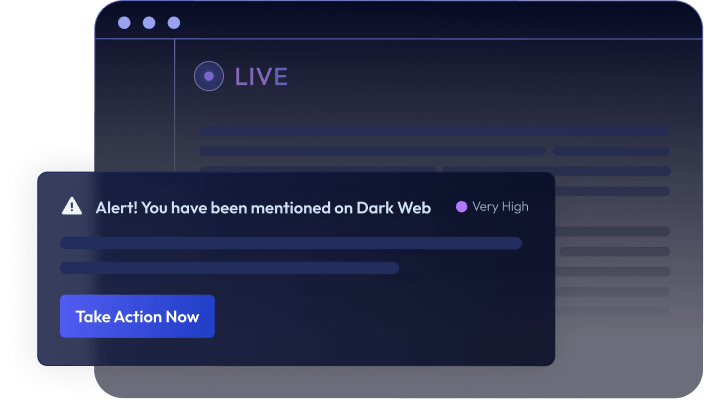
Integrates with Your Tools


 Microsoft Teams

 Microsoft Entra ID


 Azure Sentinel
Automatic Account Protection
The Industry’s Deepest Cybercrime Dataset

The Measured Impact of Flare
321% ROI
25% Reduced Breach Risk
1300+ Hours Saved
“What used to take about 1500 hours to complete can now be done in 1 week. Flare allows me to empower junior analysts to do dark web investigations that were previously impossible, hence liberating bandwidth.“
“Other solutions would present us with thousands of potential leaks which were impossible to work with for our small team, Flare was the only one that could successfully filter and prioritize data leaks with their 5-point scoring system.”
“What used to take about 1500 hours to complete can now be done in 1 week. Flare allows me to empower junior analysts to do dark web investigations that were previously impossible, hence liberating bandwidth.”
“We audited dozens of different solutions and Flare was the only one making CTI easy and understandable for all, with the right data.”
“Flare enables us to react quickly when threats are publicized. It helps us protect our brand and financial resources from data breaches.”
“We audited dozens of different solutions and Flare was the only one making CTI easy and understandable for all, with the right data.”
Customer Success Stories

Frequently Asked Questions About Cyber Threat Intelligence for Financial Services
How can infostealer malware impact financial services organizations?
Infostealer malware is designed to quietly harvest data from infected devices, including saved passwords, session cookies, autofill data, crypto wallets, and system information. The stolen data (stealer logs) is packaged and sold or shared on dark web marketplaces and Telegram channels.
They matter for monitoring because of:
- Employee compromise: Infected employee or contractor devices can expose VPN, SSO, email, and internal application credentials, giving attackers a direct path to the network.
- Customer account takeover and fraud: Stolen customer credentials and session cookies can let attackers bypass passwords and sometimes MFA, then drain accounts or commit fraud.
- Ransomware and extortion: Ransomware groups and initial access brokers frequently buy stealer logs as an easy way in.
- Third-party exposure: A vendor’s infected device can expose credentials that connect to your systems.
- Regulatory and reputational fallout: Credential-driven breaches can trigger notification requirements, fines, customer attrition, and loss of trust.
How can financial services security teams mitigate risks from stealer logs?
Practitioners should reframe stealer log exposure as an operational risk indicator, rather than a cybercrime statistic. With an identity-first cyber threat intelligence platform, practitioners can:
- Monitor for both corporate and customer exposures: Employee device compromise deserves their own detection and response procedures, separate from monitoring for consumer-facing fraud.
- Prioritize infrastructure credentials for immediate triage: A compromised login to a banking vendor, card issuer, or payment rail can expose institutions running on those systems. Cutting down the time to detecting and remediating these credentials is crucial to mitigating risk.
- Extend monitoring to third-party vendors: Exposures can originate from outside of the direct organization, even across borders, which can fall outside of standard employee monitoring.
Learn more about financial services stealer logs in the US and EMEA.
How can financial services security teams set up a dark web monitoring program?
Don’t start with “Which dark web sites should I monitor?” Start with “What questions does my threat intelligence program need to answer?” Then select the sources that provide the best signals for those questions.
In practice, that means beginning with the organization’s threat model: who is likely to target you, what they’re after, and how they typically operate. Then let that determine which sources provide the most relevant intelligence.
Most organizations can think about their exposure in three broad layers:
- Core business and services: online banking (OLB), payment systems, branches, and other critical financial services.
- Organizational and technology assets: servers, endpoints, cloud infrastructure, network equipment, applications, SaaS platforms, identities, employees, and third parties.
- Customers: particularly threats such as phishing, credential theft, social engineering, account takeover, and malware that can result in financial loss and reputational damage.
For each layer, define the specific intelligence requirements first, then identify the sources most likely to answer them. For example, when protecting online banking customers, one intelligence requirement might be: how are threat actors currently compromising banking customers? Answering that means monitoring not just malware advertisements, but tutorials, discussions, services, tooling, and operational techniques as well.
With that framework in mind, here’s what it looks like to apply it across each layer:
- Organizational and technology assets. Watch for shadow IT and inadvertent exposure including unsanctioned tools, misconfigured cloud storage, and forgotten assets remain a significant and often underestimated source of risk.
- Supply chain and third parties. Ransomware leak sites and third-party breach data can be just as valuable as direct monitoring. An organization may never be directly compromised, yet still have sensitive information exposed because a supplier, contractor, or partner was breached, so tracking your organizational identifiers across leak sites and leaked datasets matters even when the breach isn’t yours.
- Customers. Focus on phishing infrastructure, lookalike domains, impersonation, credential theft, and infostealer data, anything that signals customers or your brand are being actively targeted. Telegram is particularly useful here, given the volume of groups and bots surfacing fresh phishing and infostealer victim data.
With Flare, organizations can define identifiers (domains, company names, email patterns, and other unique indicators) and continuously search sources across the clear & dark web such as GitHub, Docker Hub, Gist, stealer logs, and other datasets for exposed credentials, secrets, or organizational information.